
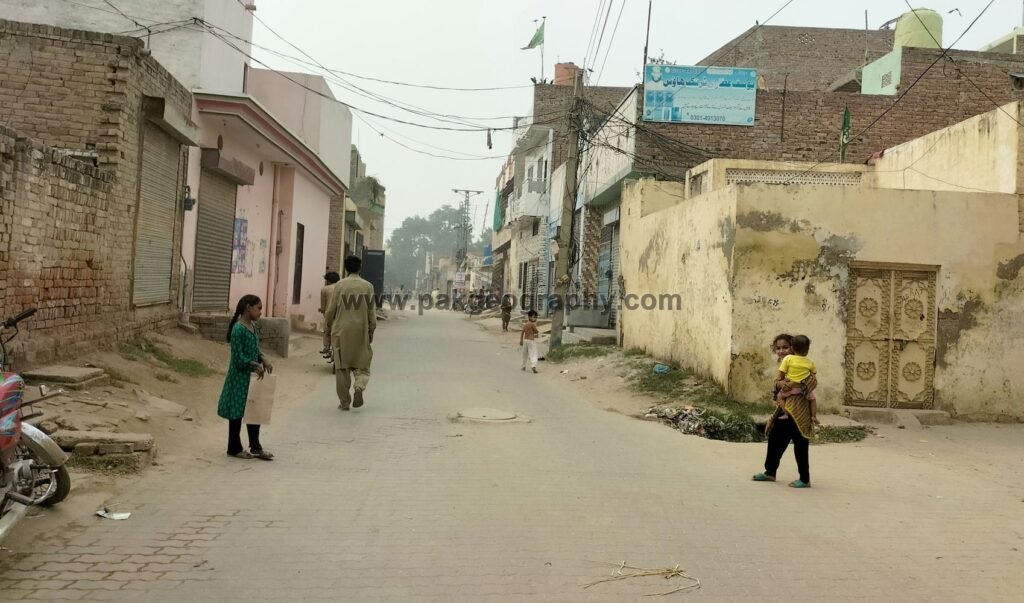
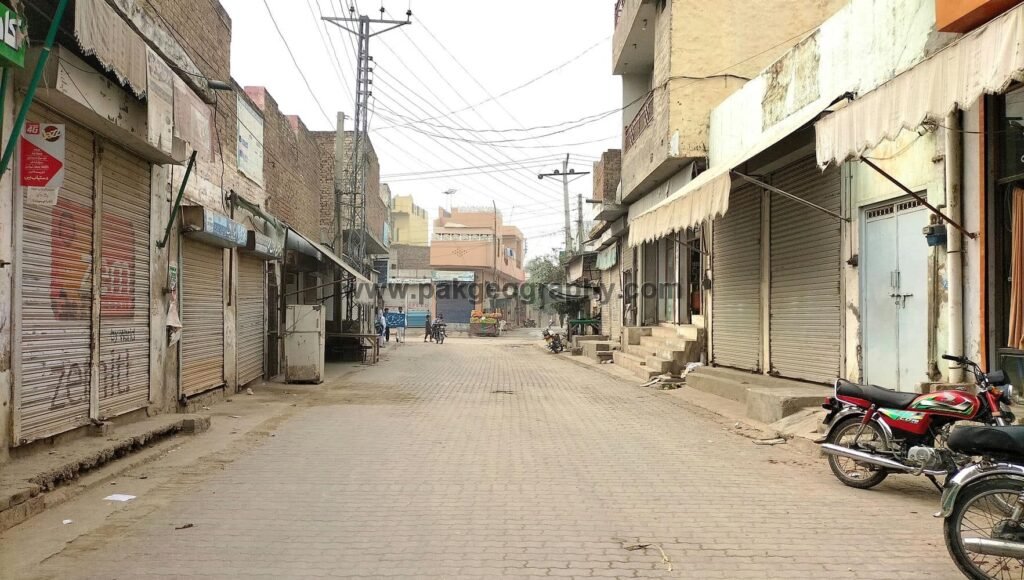
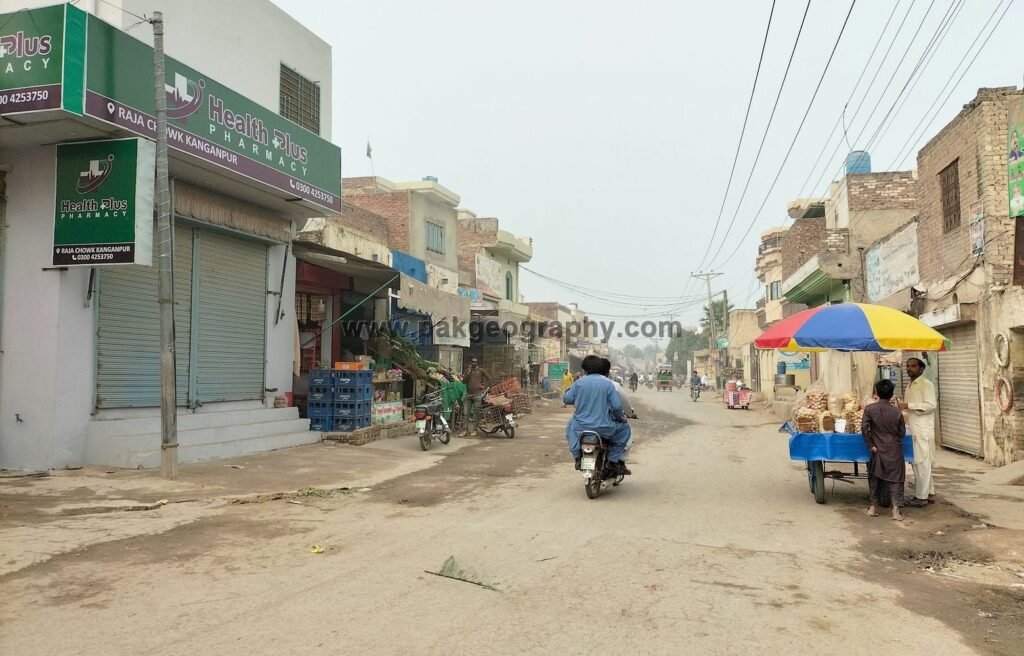
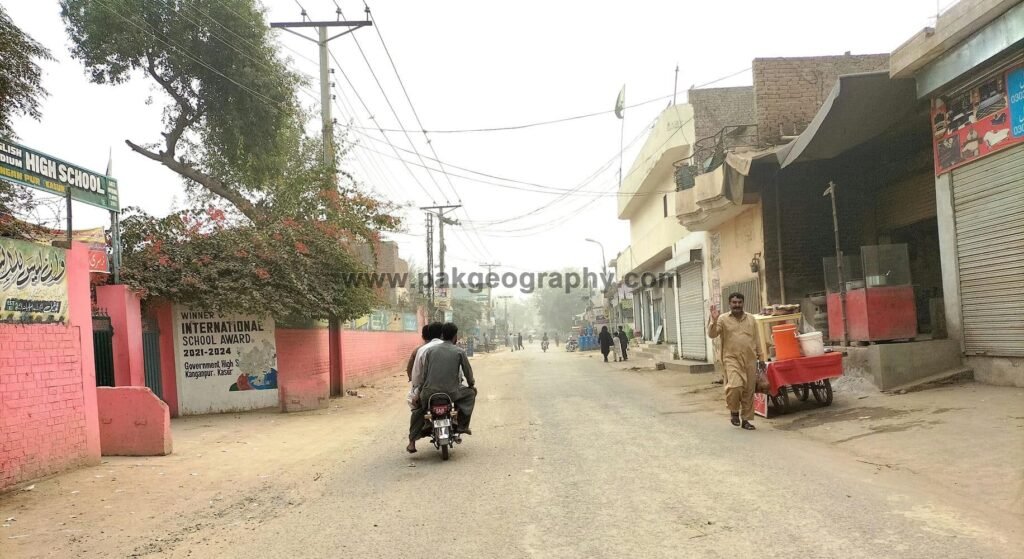
Kanganpur is a town and union council of Tehsil Chunian, District Kasur, Province Punjab, Pakistan. Its surrounding areas are Manak Deki, Kalas Gama, Fattuke, Qazi Wala and Kot Muhammad Hasan. It is located about 30 Km southeast of Tehsil headquarter Chunian. Its latitude is 30.76916° or 30° 46′ 9″ north, while its longitude is 74.12493° or 74° 7′ 30″ east. Postal code of Kanganpur is 55000.
Kanganpur History
The origins of Kanganpur trace back to 650 AD when Raja Kambo of Chunian gifted the area as dowry to his daughter, Rani Kangan Bars.1 She named the region after herself, and although it remained sparsely populated for some time, Mughal Emperor Zaheer Udin Babar later granted it as a feudal estate to General Akbar Mughal, who initiated its development. A notable historical site is the Rani Bagh, a fort-like structure built in 1650 AD by Emperor Shah Jahan as a recreational retreat for Maharaja Ranjit Singh’s family.
The town holds cultural and religious significance, particularly in Sikh history. Guru Nanak Dev Ji, the founder of Sikhism, is believed to have stayed in this town under a Waan tree alongside his companion Bhai Mardana. In 1939, a commemorative Gurdwara named Gurdwara Maal Ji Sahib was established at this site, marking its importance to Sikh devotees.




Population of Kanganpur
Kanganpur is a municipal committee and urban town whose demographic profile reflects steady population growth along with improving social and educational indicators. According to the 2023 census2, the total population of Kanganpur stands at 38,520. Out of this, the male population is 20,046, while females number 18,466, indicating a relatively balanced gender composition that is important for sustainable urban development and community participation.
According to 2017 census, population of Kangan Pur MC was 28184, male population was 14377, while that of females was 13800.
Literacy Profile & Educational Attainment
Education is one of the key indicators of social progress in Kanganpur. The overall literacy rate of the town is recorded at 69.65 percent, which is good compared to similar urban settlements. Male literacy stands at 76.01 percent, while female literacy is 62.84 percent. Although a noticeable gap exists between male and female literacy, the figures suggest increasing access to education for both genders, especially at the basic and secondary levels.
The educational attainment data highlights how the literate population is distributed across different levels of education. In the category of primary but below matric education, 5,379 males and 4,199 females fall within this group, showing a strong base of basic education among residents.
In the matric but below degree category, the town has 3,044 males and 2,303 females. This segment reflects the population that has completed secondary education and is either engaged in employment or pursuing higher studies. At the higher education level, degree and above, this town records 833 males and 810 females, indicating a comparatively balanced representation of genders in advanced education.
Religious and Age Composition
Kanganpur’s population is predominantly Muslim, with 37,780 residents belonging to the Muslim community, while the non-Muslim population is 740. This religious composition reflects social cohesion with minority presence contributing to the town’s diversity.
In terms of age structure, 27,003 residents are aged 10 years and above, while the population aged 18 years and above is 19,662, representing the active and voting-age population. Senior citizens aged 60 years and above number 2,095, highlighting the need for healthcare and social support services for the elderly.
Agriculture and Economy
Most of its inhabitants earn its livelihood through agriculture. Kangan Pur is renowned for hosting Pakistan’s largest turmeric market. The town’s fertile lands and favorable climate have made it a hub for turmeric cultivation, attracting traders nationwide. The turmeric undergoes a meticulous process of cleaning, boiling, and sun-drying before being marketed. This spice is a staple in Pakistani dishes and is known for its medicinal properties, including anti-inflammatory and antioxidant benefits.3
Infrastructure and Amenities of Life Kanganpur
This town is equipped with various urban facilities that cater to the needs of its residents. Their detail is given below:
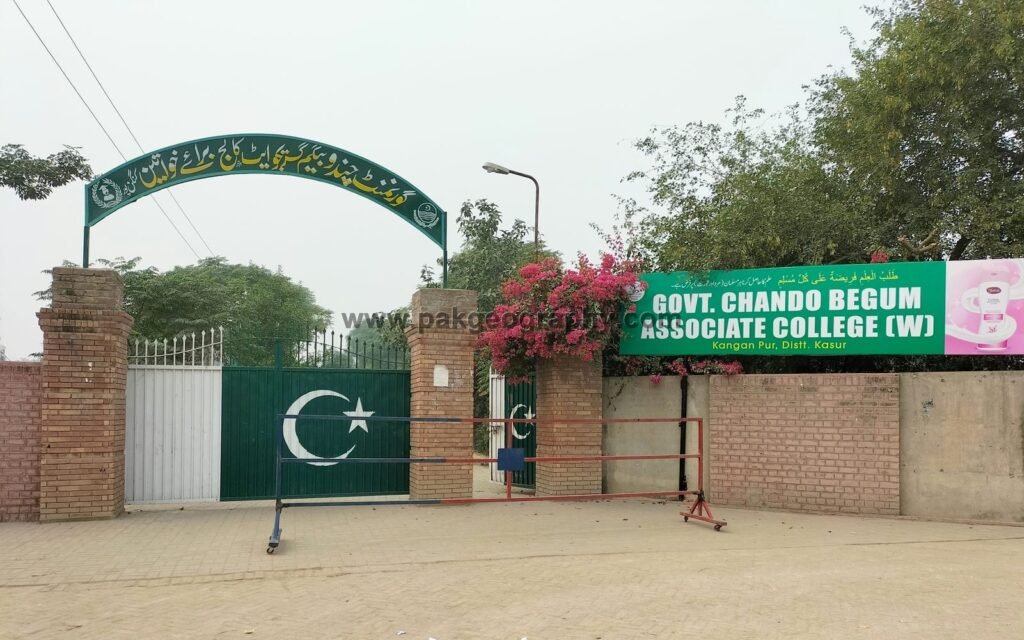
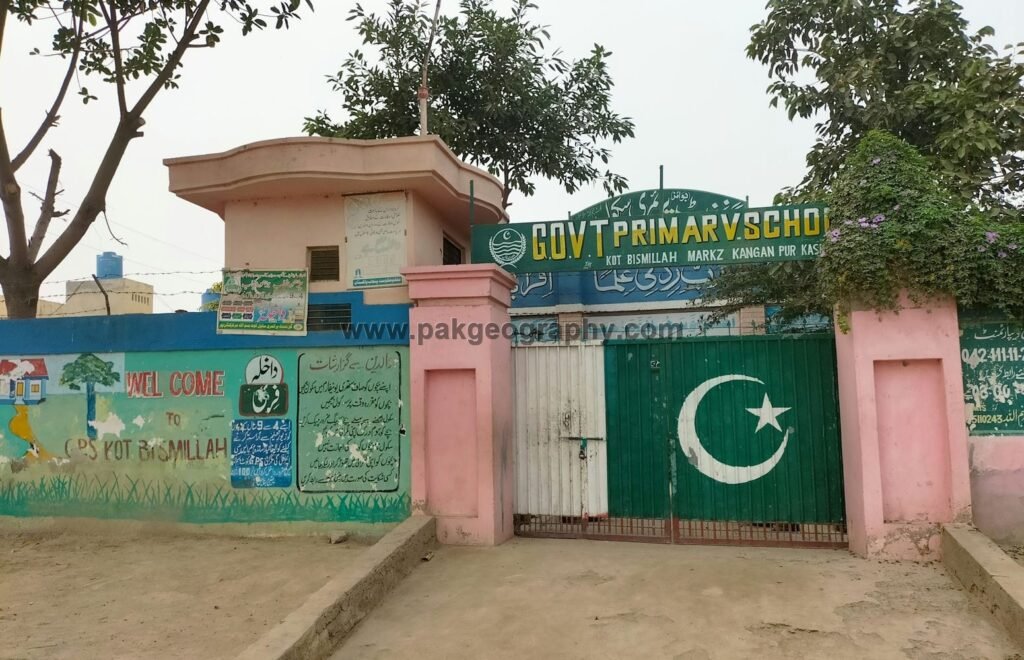
Education: The town has boys’ and girls’ primary schools, high schools, a higher secondary school, and private institutions offering quality education.
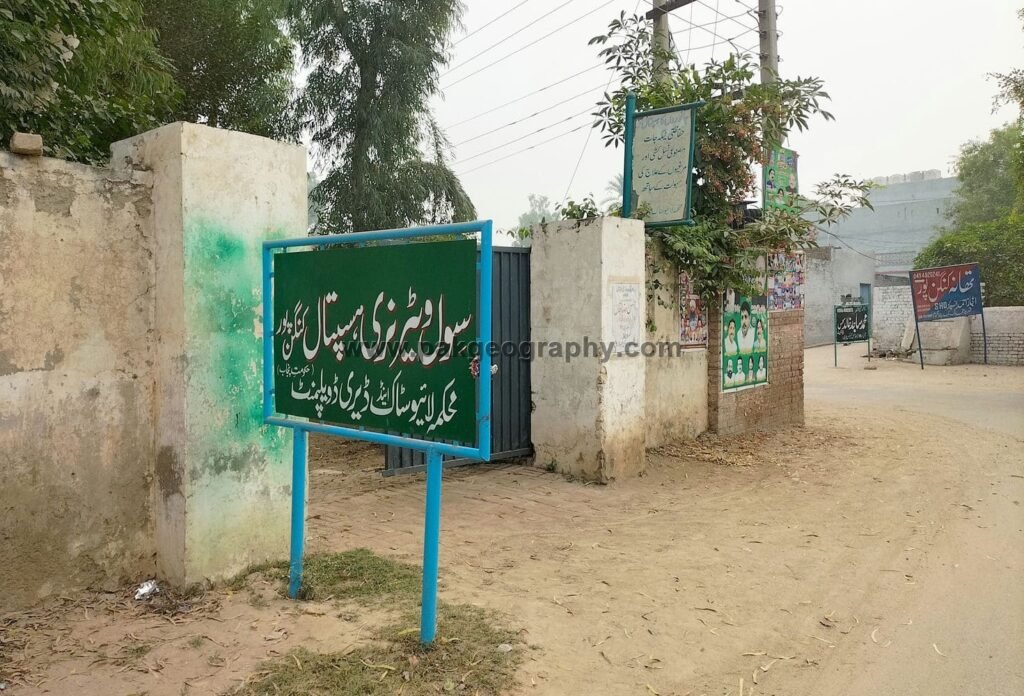
Healthcare: A rural health center (RHC) and a veterinary hospital provide essential medical services. RHC Kangan Pur contact No: 049-4820120
Utilities: Residents have access to clean drinking water, a drainage system, and Sui gas facilities.
Financial Services: Banks like Punjab Bank and Habib Bank Limited operate in the town, offering online banking and ATM services.
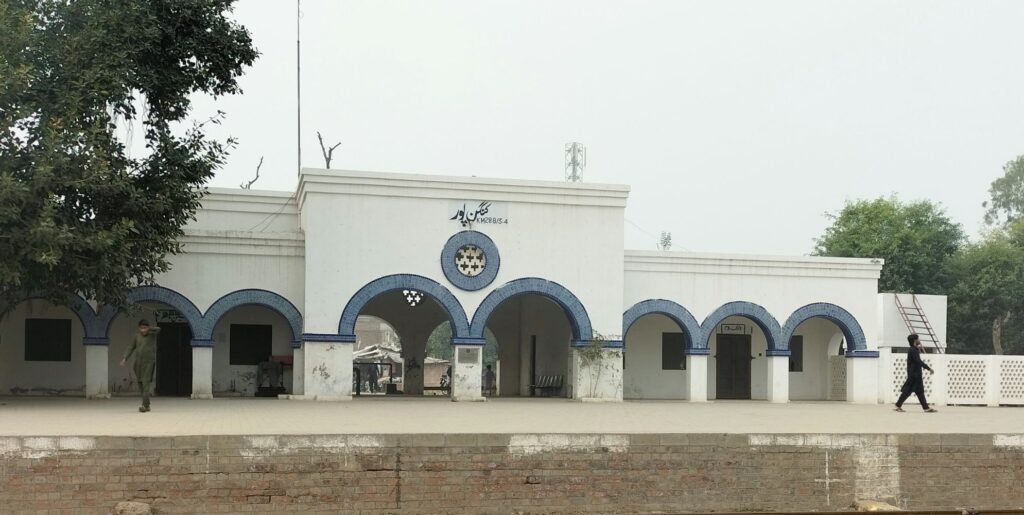
Transportation: Kanganpur has a railway station, and well-maintained roads, facilitating efficient connectivity.
Communication: The town is served by a PTCL exchange and mobile operators such as Mobilink, Ufone, Telenor, and Zong, ensuring robust telecommunication services.
Government Services: Facilities include a police station, excise and taxation office, NADRA office, post office, utility stores, a municipal committee office, a grid station, and a LESCO sub-division office.
Recreation: Residents and visitors can enjoy the Sports Stadium and several parks.
Sources/ References